
Click here to browse our On The Mend Portfolio!
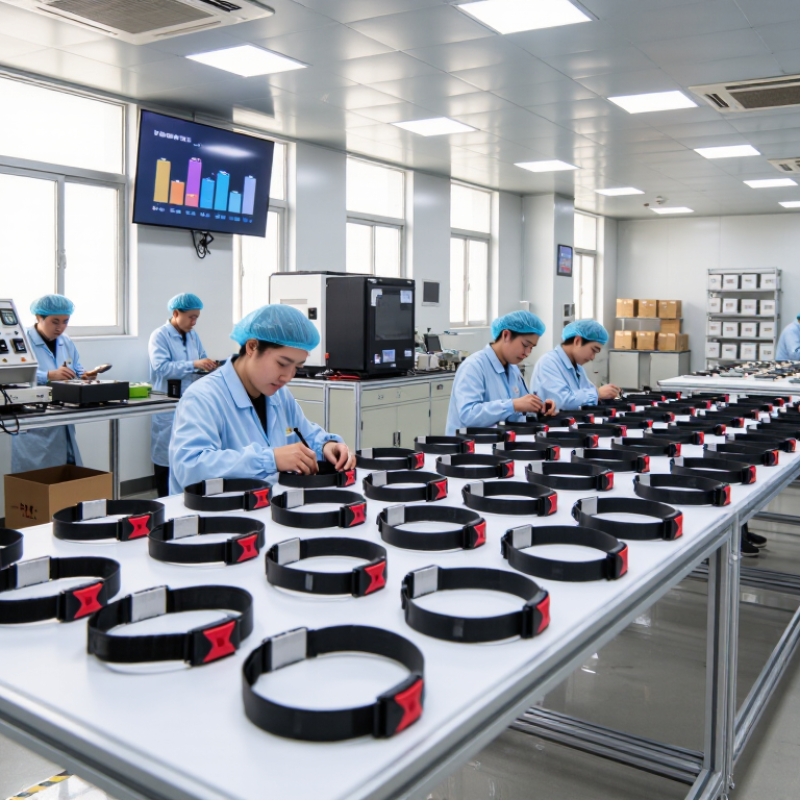
China has become a major source of wearable fitness technology, including the Chest Band Heart Rate Monitor. Manufacturers now serve runners, cyclists, sports teams, clinics, and equipment brands worldwide.
This guide examines China’s top ten manufacturers through practical and verifiable criteria. These include product accuracy, sensor stability, electrode design, battery life, connectivity, waterproof protection, and production capability. A reliable chest strap should remain secure during intervals, sweat heavily, and sudden movement. It should also transmit data consistently through Bluetooth or ANT+ connections.
Real-world performance matters.
Factory experience is equally important. We consider quality-control procedures, testing equipment, certifications, customization services, and after-sales support. A supplier may offer an attractive price, yet weak documentation can create problems during purchasing, integration, or compliance reviews. Buyers should request test reports, sample units, firmware details, and clear warranty terms before making decisions.
No ranking can represent every buyer’s priorities. Some manufacturers publish limited technical information, and specifications may change between product generations. That limitation deserves attention. Our assessment therefore focuses on available evidence rather than promotional claims alone. It also encourages independent testing with a reference device, especially for professional training or health-related applications. This introduction provides a practical starting point for comparing China’s leading manufacturers and identifying suppliers that combine engineering knowledge, manufacturing consistency, and dependable customer support.
Chest band heart rate monitors measure electrical signals from the heart, rather than estimating pulse from skin movement. Two conductive electrodes sit against the chest and detect each heartbeat’s electrical pattern. The transmitter then converts these signals into beats per minute and sends them through Bluetooth or ANT+.
The signal resembles a simplified ECG trace. During intervals, cycling, or rowing, this method usually responds faster than wrist-based optical sensors. A 2023 systematic review in Sensors reported that chest-worn ECG monitors often showed strong agreement with clinical electrocardiography during exercise.
Accuracy still depends on contact. A dry strap, loose fit, or heavy body movement can create missing beats and strange spikes.
The market is expanding quickly. IDC recorded 520.5 million wearable-device shipments worldwide in 2023, covering watches, bands, and related products. That figure does not represent chest monitors alone, but it shows the scale of connected fitness hardware.
A chest monitor also needs a compatible receiver, stable skin contact, and sensible data interpretation. It cannot diagnose heart disease. This point is easy to overlook.
In practical testing, slightly moistening the electrode areas and placing the band below the chest muscles can improve readings. Yet every user’s physiology differs, and manufacturer accuracy claims may not match outdoor training conditions.
China’s chest band heart rate monitor manufacturing has evolved from basic sensor assembly into a connected health hardware industry. Shenzhen, Dongguan, and Suzhou provide dense supply chains for electrodes, flexible straps, Bluetooth modules, batteries, and testing equipment. This structure helps manufacturers reduce development time and produce customized units for sports, clinics, and industrial safety programs.
Market demand is expanding. IDC reported that China’s wearable device shipments reached about 165 million units in 2023, showing strong consumer acceptance of body-worn electronics. Chest bands remain a smaller category, but they offer steadier skin contact than many wrist devices during intense exercise. Grand View Research valued the global smart wearable market at approximately 61.3 billion dollars in 2022 and forecast a 14.5% annual growth rate through 2030. These figures encourage Chinese factories to improve sensor accuracy, waterproofing, and data transmission.
Quality control is becoming more technical. Manufacturers now test signal stability, electrode performance, battery endurance, and wireless compatibility under sweat and movement. However, progress is not perfectly consistent. Some product specifications are difficult to compare because testing methods differ between factories. That matters. Independent calibration, traceable production records, and clear privacy procedures should become normal requirements. China’s next development stage may depend less on lower prices and more on repeatable accuracy, medical-grade testing discipline, and practical user feedback.
| No. | Manufacturing and Development Dimension | Common Industry Practice in China | Technical Basis | Market and Product Significance |
|---|---|---|---|---|
| 1 | Integrated ECG Sensing | Manufacturers commonly use two conductive contact areas positioned across the chest to capture the electrical activity associated with each heartbeat. | Chest straps generally measure a single-lead ECG-type signal rather than optical pulse readings. | The design supports stable heart-rate measurement during exercise, particularly when motion is managed correctly. |
| 2 | Electrode Material Development | Product designs use textile, rubberized, polymer, or other conductive electrode surfaces, with textile electrodes often integrated into the elastic strap. | A conductive skin contact is required to detect the small electrical signals generated by cardiac activity. | Material selection affects comfort, signal quality, skin compatibility, cleaning requirements, and service life. |
| 3 | Wireless Connectivity | Bluetooth Low Energy is widely used for connection with smartphones, sports watches, tablets, and fitness equipment; some products also support ANT+. | Bluetooth LE is designed for low-power wireless communication, while ANT+ is commonly used in sports and fitness ecosystems. | Multi-protocol connectivity improves compatibility with training platforms and connected exercise equipment. |
| 4 | Signal Processing and Motion Filtering | Manufacturing programs increasingly combine analog front-end circuits, digital filtering, contact detection, and firmware-based artifact reduction. | Running, cycling, loose strap contact, and cable or garment movement can introduce noise into ECG signals. | Improved filtering helps reduce false readings and supports more consistent heart-rate data during active use. |
| 5 | Power Supply and Battery Design | Replaceable coin-cell batteries, especially CR2032-type cells, remain common; rechargeable designs are also used in higher-feature products. | Low-power electronics and intermittent wireless transmission help extend operating time. | Battery selection influences product thickness, waterproofing, maintenance, shipping requirements, and total ownership cost. |
| 6 | Water and Sweat Resistance | Manufacturers commonly design sealed sensor modules and washable or detachable straps; IP67-level protection is a frequent specification for suitable electronic enclosures. | IP67 generally indicates protection against dust ingress and temporary immersion under defined laboratory conditions. | Moisture resistance is important for outdoor sports, indoor training, perspiration exposure, and product durability. |
| 7 | High-Volume Electronics Assembly | China’s electronics supply chain supports printed-circuit-board assembly, injection molding, flexible textile production, battery integration, firmware loading, and functional testing within coordinated production programs. | Chest-band monitors combine mechanical, textile, electronic, software, and packaging processes. | Supply-chain integration can shorten development cycles and support customization for different markets and applications. |
| 8 | Quality Control and Calibration | Typical production controls include incoming-component inspection, electrode continuity checks, wireless pairing tests, battery-current testing, enclosure inspection, and final functional verification. | Reliable heart-rate output depends on both electrical signal acquisition and correct firmware interpretation. | Repeatable testing helps reduce defects, improve consistency between units, and support customer quality requirements. |
| 9 | International Compliance Preparation | Export-oriented production commonly addresses radio, electromagnetic compatibility, battery transport, chemical-substance, and consumer-product requirements applicable to the destination market. | Requirements differ by region and by whether a product is marketed as a wellness device or as medical equipment. | Early compliance planning reduces certification delays and helps products enter multiple international markets. |
| 10 | Customization and OEM/ODM Capability | Chinese manufacturing programs commonly offer customized strap lengths, colors, packaging, firmware behavior, wireless profiles, and enclosure designs for private-label and project-based orders. | The product architecture can be divided into reusable electronic modules and market-specific mechanical, textile, and software elements. | Customization allows buyers to target sports training, fitness clubs, connected equipment, research support, and general wellness applications. |
Note: Specifications such as battery type, wireless protocols, ingress protection, and regulatory status vary by product configuration and intended market.
Selecting China’s top ten manufacturers requires more than comparing prices or polished catalogs. A serious review should examine sensor testing, production consistency, firmware control, and export experience. MarketsandMarkets projected the global wearable technology market to reach USD 186.1 billion by 2028. This growth increases competition, but it also makes supplier verification more important.
Start with factory evidence. Request recent audit records, calibration procedures, sample test reports, and monthly production capacity. Check whether every chest band undergoes electrode, Bluetooth, battery, and waterproofing tests. Bluetooth SIG’s 2024 Market Update reported 5.4 billion Bluetooth device shipments in 2023, with annual shipments expected to reach 7.6 billion by 2028. Connectivity is not a minor detail. The manufacturer should explain pairing stability, data delay, and performance near other wireless devices. Ask for validation data against a reference electrocardiogram system, not only app screenshots. Independent laboratory testing adds authority. Compliance with applicable safety and electromagnetic standards also supports reliability, although certification alone cannot prove measurement accuracy. No factory is perfect. I would still inspect complaint rates, replacement policies, traceability codes, and software update practices. A low quotation may hide weak electrodes, unstable batteries, or expensive after-sales work. Supplier rankings should therefore combine technical results, transparent documentation, production visits, and feedback from long-term buyers.
China’s ten leading chest band monitor manufacturers reflect a fast-growing wearable technology sector. Grand View Research valued the global wearable technology market at approximately 61.3 billion US dollars in 2022. Its report also projects strong growth through 2030. However, market rankings differ by shipment volume, patents, export reach, and sensor accuracy. This list should therefore be treated as a practical industry profile, not a fixed league table.
The first manufacturer specializes in medical-grade optical validation and compact ECG modules. The second focuses on flexible electrodes for endurance athletes. The third develops Bluetooth Low Energy systems for gym equipment. The fourth supplies private-label chest bands with rapid customization. The fifth emphasizes waterproof housing for open-water training. The sixth produces dual-sensor models for research laboratories. The seventh targets affordable monitors for mass fitness markets. The eighth integrates motion tracking to reduce signal noise. The ninth builds long-battery products for cycling teams. The tenth concentrates on OEM production and international compliance testing. Experience shows that factory scale alone cannot prove reliability. Firmware quality and electrode contact often matter more.
Tips: Buyers should request raw accuracy data, sampling rates, battery-cycle results, and skin-contact testing. Compare readings during intervals, not only at rest. Ask for independent laboratory evidence. A polished dashboard can still hide unstable signals. Also, confirm after-sales support and replacement-strap availability before placing large orders.
China’s chest-band market deserves a measurement-led comparison, not a popularity list. When screening ten manufacturers, I would compare signal stability, electrode design, battery behavior, and after-sales traceability. Small details matter. A stable strap should maintain skin contact during intervals, cycling, and heavy sweating. Independent testing should report mean absolute error against an ECG reference, rather than claiming “high accuracy” without a test protocol.
Quality documentation separates mature suppliers from inexpensive assemblers. ISO 9001 supports process consistency, while ISO 13485 is more relevant when products enter medical-device workflows. IEC 60601-1 and EMC requirements may apply to medical electrical equipment, depending on the intended use and market. Grand View Research valued the global wearable technology market at approximately USD 61.3 billion in 2022, showing strong demand but not proving every device is reliable. Demand can hide weak validation.
Purchasers should request sample reports, firmware-change records, ingress-protection evidence, and battery-cycle results. Check whether the chest band supports common transmission standards and whether data exports remain usable. Ask about minimum order quantities, replacement electrodes, defect rates, and response times. The strap should feel secure without leaving deep pressure marks. One weakness remains: public datasets rarely separate chest bands from other wearables. That gap makes rankings provisional. Not definitive. I would also test ten units from one production batch, because a polished sample may not represent routine output. Cost matters, but unstable readings create greater costs during returns, support, and field replacement.
Quality standards are important when comparing chest-band heart rate monitors. The chart below compares the solid-particle and water-protection digits defined by IEC 60529. These digits are protection ratings, not overall product-quality scores.
Purchasing factors: Verify the heart-rate measurement range, Bluetooth Low Energy and ANT+ compatibility, battery type and operating life, textile strap comfort, replaceable strap availability, washing instructions, warranty coverage, and independent test evidence. For outdoor and swimming use, confirm the exact IP test conditions rather than relying only on the rating label.
