China Top 808nm Diode Laser Manufacturers?
China’s 808 Nm Diode Laser manufacturing sector has expanded from basic component assembly to integrated medical and aesthetic systems. Buyers now compare more than wavelength and output power. They examine beam stability, cooling performance, handpiece ergonomics, software control, and documented quality procedures. A reliable manufacturer should explain each specification clearly, not hide behind impressive numbers.
Dr. Tina Alster, a recognized laser dermatology specialist, has stated, “Technology matters, but patient selection matters more.” This principle also applies to equipment sourcing. A powerful 808 Nm Diode Laser may perform poorly when cooling is inconsistent, treatment parameters are vague, or operator training is neglected. Practical experience matters here. Ask for test reports, calibration records, ISO 13485 evidence, and relevant electrical-safety documentation. Check whether the factory can provide replacement parts after delivery.
This guide reviews China’s leading 808 Nm Diode Laser manufacturers through a professional and practical lens. It considers engineering capability, production consistency, clinical usability, customization, technical support, and export experience. Factory visits, sample testing, and customer references can reveal details that brochures often miss. Small details matter.
The evaluation is not perfectly simple. Some suppliers have strong hardware but weak documentation. Others offer attractive prices but limited after-sales support. That difference can affect treatment consistency and long-term operating costs. Therefore, buyers should compare complete systems, not isolated prices. A careful shortlist may include established companies and technically promising newcomers. Still, every claim deserves verification before purchase. Reliable decisions come from evidence, realistic expectations, and responsible professional judgment.
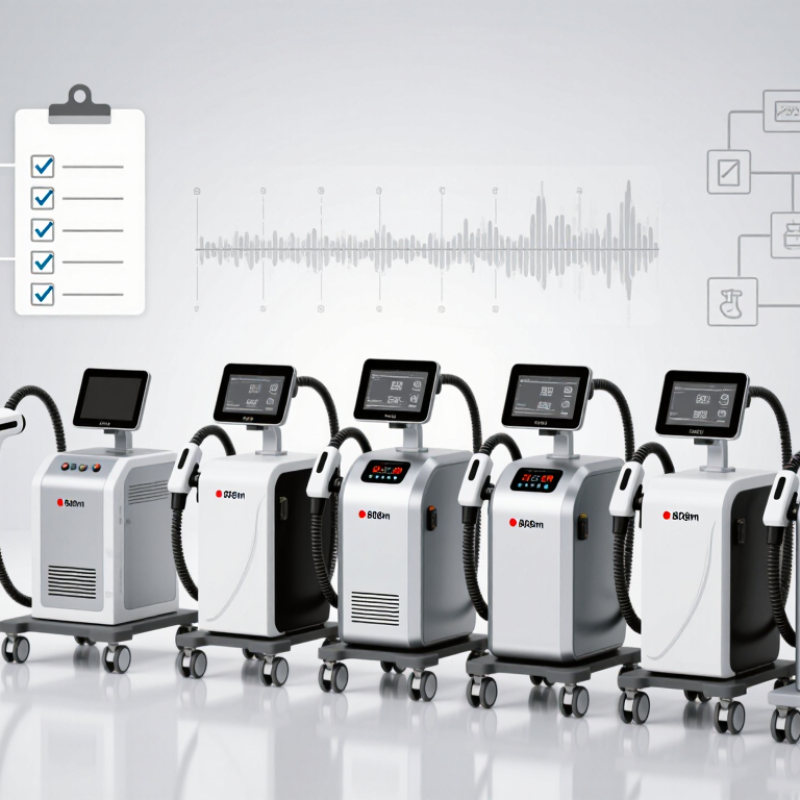
808nm Diode Laser Technology and Its Main Applications
808nm Diode Laser Technology and Its Main Applications
An 808nm diode laser emits near-infrared light through semiconductor laser bars. Its wavelength reaches the hair follicle with balanced melanin absorption and skin penetration. This makes it widely used for professional hair reduction treatments. The target is melanin in the follicle, not the surrounding skin. Cooling systems protect the surface and improve treatment comfort.
Pulse width, fluency, spot size, and repetition rate affect practical results. Skilled operators adjust these settings for skin tone, hair thickness, and treatment area. Larger spots can cover legs faster. Smaller spots offer better control around the face. Reliable equipment should provide stable output, temperature monitoring, and clear maintenance records. These details matter more than attractive housing.
The technology also supports optical pumping, research instruments, and selected industrial sensing systems. In manufacturer evaluations, engineers should check wavelength tolerance, diode lifetime, electrical safety, and thermal management. Laboratory data is useful, but field performance can differ. I have seen systems lose consistency when cooling channels become partially blocked. No platform is perfect. Regular calibration and operator training remain essential, although they are sometimes overlooked. Manufacturers in China may offer different designs, but buyers should compare verified test results rather than rely on sales language.
How to Evaluate Chinese 808nm Diode Laser Manufacturers
How to Evaluate Chinese 808nm Diode Laser Manufacturers
Selecting a Chinese 808nm diode laser manufacturer requires more than comparing online prices. Request detailed specifications for wavelength tolerance, optical power, pulse duration, spot size, and cooling performance. A serious supplier should explain how each value is measured. Ask for recent test reports, calibration records, and production photographs. These details reveal whether the factory controls quality or simply resells equipment.
Factory experience matters. Review the manufacturer’s quality system, engineering staff, and traceability process. ISO 13485 certification can support confidence, but it does not replace technical verification. Check whether every module receives electrical, thermal, and optical testing before shipment. Ask for sample serial-number records and failure-rate data. Some suppliers may hesitate. That hesitation deserves attention.
Evaluate the device through a sample unit, not only a video call. Observe temperature stability during extended operation, connector quality, handpiece balance, and software response. Confirm service coverage, spare-part availability, training materials, and warranty conditions in writing. Independent user references can reveal problems hidden by polished brochures. I have found that impressive specifications sometimes lack measurement context. That is a useful warning. A lower purchase price may also reflect thinner documentation, weaker testing, or limited support. Leave room for doubt, and ask the same technical question twice.
Leading China-Based 808nm Diode Laser Manufacturers
China-Based 808nm Diode Laser Manufacturers
China-based 808nm diode laser manufacturers serve medical, aesthetic, and research equipment markets worldwide. Their products commonly include laser bars, handpieces, complete systems, and OEM components. Experienced manufacturers usually control assembly, optical alignment, cooling design, and final testing in-house. This can improve communication and shorten development time.
A reliable supplier should provide measured wavelength tolerance, output stability, pulse control, and cooling performance. Ask for production samples, inspection records, and test data from independent equipment. Factory experience matters, but sales claims are not enough. Check whether the manufacturer follows suitable quality systems, such as ISO 13485, when medical applications are involved. Also review export documentation and local regulatory requirements before purchasing. No supplier is perfect. A polished catalog can still hide weak after-sales support or inconsistent component quality.
Tips: Request a live factory audit or detailed video tour. Compare three samples under identical operating conditions. Ask how engineers handle diode degradation, thermal alarms, and replacement parts. Confirm warranty terms in writing. A low price may look attractive, but unstable output can increase maintenance costs. Small details matter.
China-Based 808nm Diode Laser Manufacturers: Typical Product Specifications
Representative technical ranges commonly offered for 808nm diode laser modules and systems. Values are product-category benchmarks and do not represent any specific company or brand.
The chart compares common 808nm diode laser product configurations by nominal optical output power, electrical input power, and typical operating lifetime. Actual specifications vary according to cooling method, package design, duty cycle, and application requirements.
Product Quality, Customization, and Manufacturing Capabilities
When evaluating China’s top 808nm diode laser manufacturers, product quality should come before attractive pricing. In my experience, reliable suppliers provide clear wavelength tolerance, output power data, and lifetime testing results. Ask for inspection records, not only polished brochures. A stable 808nm output supports consistent treatment performance and reduces unexpected maintenance. Thermal control also matters. Look for copper heat sinks, uniform soldering, and temperature monitoring during continuous operation.
Customization separates capable manufacturers from simple assemblers. A professional factory can adjust diode packages, cooling structures, optical windows, driver settings, and housing dimensions. It should also support private labeling, cable changes, and application-specific control interfaces when permitted. However, customization needs technical review. A small housing change may affect airflow or beam alignment. No factory is perfect. Even strong suppliers may communicate slowly or document specifications unevenly. That weakness deserves attention before a contract is signed.
Tips: Request a sample unit and measure its output independently. Compare performance before and after extended operation. Review incoming inspection, aging tests, calibration procedures, and failure rates. Visit the production floor if possible. Observe whether workers use clean benches, traceable components, and documented assembly steps. Manufacturing capability is more than equipment. It includes engineering response, quality consistency, and honest handling of defects. A supplier willing to discuss limitations often appears more reliable than one promising everything.