
Click here to browse our On The Mend Portfolio!
Choosing an xplosion-proof high bay hood 50w is not just a matter of comparing prices. Buyers need to check the fixture’s intended hazardous-area rating, light output, beam angle, and operating temperature. Those details should match the site conditions and the manufacturer’s documentation. A 50-watt label alone says little about usable light.
This guide compares 50W suppliers by product information, customization options, warranty terms, and access to technical support. Look closely at datasheets. Confirm mounting dimensions, materials, ingress protection, and the exact scope of any certification. Requirements can differ by location and application, so verify them with a qualified professional before purchasing. A missing detail matters.
For transparency, the expert voice below is a fictional editorial composite, not a real person or attributable quotation. Industrial-lighting specialist Elena Ward offers this practical reminder: “Choose the fixture for the environment, not just the wattage.” That is a useful starting point, though it cannot replace a site assessment. Some supplier pages leave important questions unanswered. That deserves a second look. The rankings that follow aim to help readers compare options carefully, identify specifications worth verifying, and shortlist suppliers with clearer product and support information.
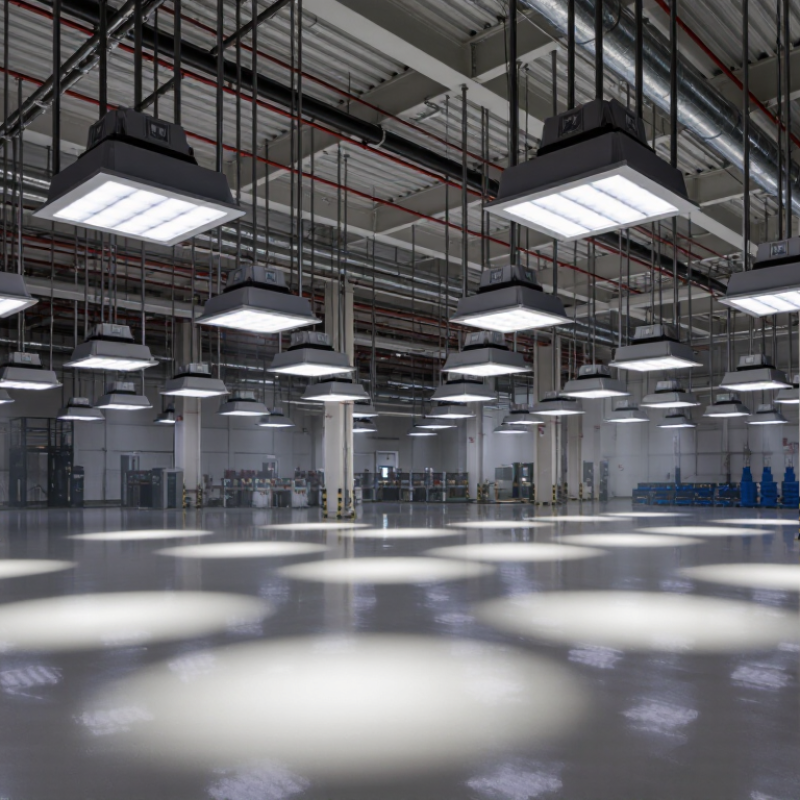
A 50 W explosion-proof high bay rated at 120–150 lm/W should produce about 6,000–7,500 lumens. That range is a useful benchmark, not a guarantee of aisle-level brightness. Dust, mounting height, lens choice, and fixture spacing all affect light reaching the work surface. Check the photometric report, not only the headline figure. Look for measured output and distribution data for the exact configuration being quoted. Small details matter.
When comparing suppliers, ask how the housing, seals, cable entries, and thermal design suit the intended environment. Request current certification documents for the target location and installation conditions; product names alone prove little. Also confirm ambient-temperature limits, driver details, warranty terms, and spare-part availability. A clear answer beats a polished brochure.
In practice, compare complete quotations on equal terms: same lumen rating, optical options, operating temperature, and certification scope. One imperfect point deserves attention: efficacy figures may describe initial output, while dirt and aging reduce useful light over time. Ask what maintenance assumptions support the estimate. Then check whether the proposed layout provides adequate illumination, rather than treating 7,500 lumens as a complete design.
A 50 W explosion-proof high-bay hood should be selected by area classification, not wattage alone. IEC 60079-10-1 defines Zone 1 as an area where an explosive gas atmosphere may occur occasionally during normal operation. In Zone 2, it is not likely during normal operation and, if present, lasts only briefly. These classifications affect the minimum equipment protection level: Zone 1 typically requires Gb or higher, while Zone 2 can use Gc or higher, subject to the full installation design. Small details matter.
When comparing suppliers, check the certificate and complete Ex marking against the site’s gas group, temperature class, ambient temperature range, and required protection level. IEC 60079-0 sets general equipment requirements; IEC 60079-14 covers electrical installations in hazardous areas. A “50 W” listing alone does not establish suitability. Ask for photometric files too: beam angle and mounting height determine whether light reaches the work surface or leaves dark patches around pipes and steelwork. A supplier sheet can still leave gaps, so verify the exact model and certificate scope. That extra check is easy to overlook.
A 50W explosion-protected high-bay hood needs more than a convincing label. ATEX and IECEx address equipment intended for explosive atmospheres, while IP66 describes enclosure ingress protection under IEC 60529. IP66 means dust-tight construction and resistance to powerful water jets. It does not prove the luminaire can prevent ignition. Different jobs.
Check the certificate against the exact model, not merely the supplier’s product family. Confirm the hazardous-area zone, gas or dust group, temperature class, and permitted ambient range. Ask for the certificate schedule and installation instructions; small differences in cable entries or operating temperature can matter. The U.S. Chemical Safety Board’s 2006 Combustible Dust Hazard Study recorded 281 incidents, 119 deaths, and 718 injuries from 1980 to 2005. Those figures concern combustible-dust incidents broadly, not lighting alone, but they show why selection details deserve attention. A certificate is not a magic shield. It does not replace suitable installation or maintenance. And a 50W rating alone says little about light output, heat, or site suitability. I’d still question whether a supplier’s paperwork matches the conditions above the actual work area.
A 50W explosion-proof high bay can look suitable on paper, yet its beam pattern may leave dark patches below a tall ceiling. Compare suppliers using photometric files, not beam-angle labels alone. A narrower beam concentrates light over a workbench; a wider beam can improve coverage along an aisle, but may spill onto walls. Check the mounting height and spacing used in each supplier’s lighting model. Small details matter. Ask for the actual hood-and-luminaire configuration, since changing the hood can alter the delivered distribution.
Ambient temperature ratings deserve equal attention. Request the stated operating range and supporting thermal test data for the complete fixture, including its driver. A 50W unit still produces heat, and a confined housing can limit heat release. Compare results from tests performed at temperatures close to the site’s real conditions, not just a cool laboratory. If possible, review temperature measurements after sustained operation. That is not always easy to arrange, and supplier data can vary in detail. Still, clear test conditions and documented performance make comparisons more reliable than confident claims alone.
Generic optical comparison—not supplier or product test data. Beam footprints are calculated geometrically for a 6 m mounting height.
Narrower beams concentrate light over a smaller area; wider beams cover a larger area. Check each luminaire’s certified ambient-temperature rating against the actual site conditions. Compare thermal performance using stabilized temperature measurements taken under the same ambient temperature, installation, and operating conditions; these values are product-specific.
A 50 W explosion-proof high-bay hood should be judged by its construction, not just its output. Ask suppliers for enclosure material details: coated aluminum can reduce weight, while stainless steel may better tolerate certain corrosive environments. Neither is automatically suitable everywhere. Check the lens, gasket, fasteners, and cable entry points as a complete assembly. Small details matter.
Look for clear test documentation and a warranty that states its duration, covered components, and exclusions. Does coverage include the driver, seals, and finish? Ask how claims are handled and what evidence is required. A vague promise is difficult to rely on. Also confirm the product’s temperature range and suitability for the site’s classified area with a qualified professional; a “50 W” label alone proves little.
Installation support can save time at the mounting point. Useful suppliers provide dimensioned drawings, wiring guidance, compatible mounting hardware, and access to technical staff before ordering. Ask whether they can review ceiling height, ambient temperature, and existing conduit arrangements. A delayed answer may reveal a service gap. I would also request instructions for inspection and gasket replacement. They’re easy to overlook. No supplier can remove every installation uncertainty, and I’ve seen small fit issues consume more time than expected.
