How to Choose the Best Medical Air Purifier for Home Use?
In today's world, clean air is essential for maintaining good health, especially at home. Many families are seeking reliable solutions to improve indoor air quality. A top expert in the field, Dr. Sarah Collins, a specialist in respiratory health, states, “Choosing the right medical air purifier can significantly impact your well-being.” Her insight emphasizes the importance of selecting an effective purifier.
When looking for a medical air purifier, consider factors like the filtration system and room size. HEPA filters are vital as they capture harmful particles. However, not all purifiers are created equal. Some may have weak fans or fail to cover the intended area efficiently. It's essential to research different models and their specifications carefully.
You might find that what works for one family may not be suitable for another. Evaluating your unique needs is crucial. Consider allergies, pets, or respiratory issues. A thoughtful choice will enhance your indoor environment, making it cleaner and healthier. Remember, the right medical air purifier can be a valuable investment in your family's health.
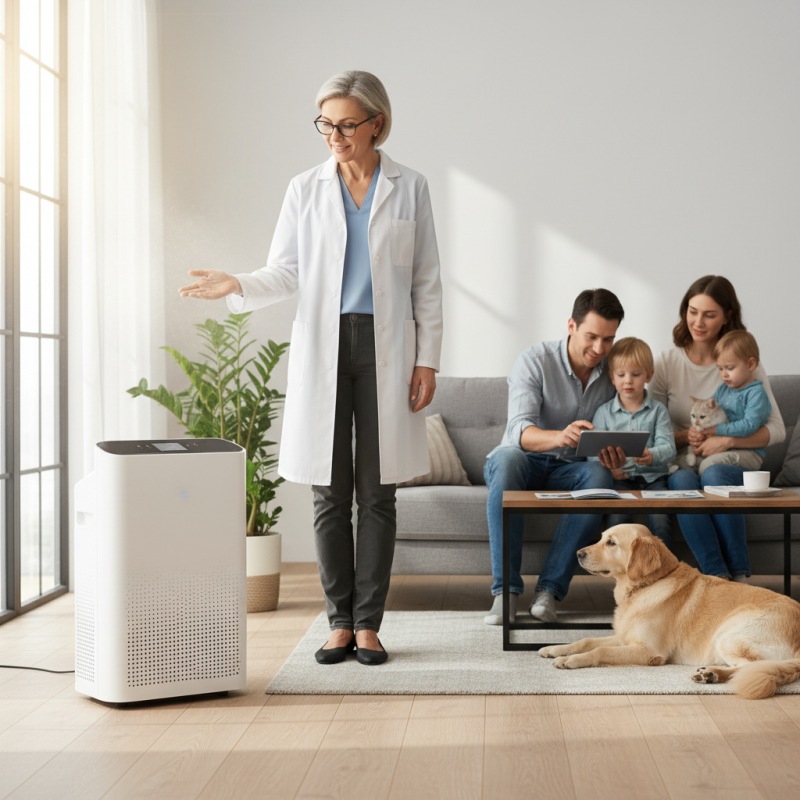
Understanding the Importance of Medical Air Purifiers in Home Environments
In a world filled with pollutants, medical air purifiers play a crucial role in home environments. They filter harmful particles, allergens, and bacteria from the air we breathe. This is especially important for those with respiratory issues or compromised immune systems. Clean air can improve overall health and wellbeing, contributing to a better quality of life.
When selecting an air purifier, consider the size of your space. A small unit may not suffice for larger rooms. Look for features such as HEPA filters. These can capture tiny particles effectively. Keep in mind that an air purifier's noise level can impact comfort. Some models are significantly quieter than others.
Tips: Regularly replace filters to maintain efficiency. This helps the unit work optimally. Also, check the Clean Air Delivery Rate (CADR) when buying. It indicates the speed at which the purifier cleans the air. Lastly, place the unit in high-traffic areas to maximize its effectiveness. Remember, a cleaner home environment is a shared responsibility.
Key Features to Look for in a Medical Air Purifier
When selecting a medical air purifier for home use, focus on filtration efficiency. Look for HEPA filters that can capture 99.97% of particles as small as 0.3 microns. Studies show that HEPA filtering systems significantly reduce airborne allergens. They are effective against mold spores, dust mites, and pet dander.
Another critical feature is the Clean Air Delivery Rate (CADR). A higher CADR indicates better performance. An air purifier with a CADR of at least 300 is ideal for large rooms. Noise levels also matter; many people overlook this aspect. Choose a unit that operates quietly, especially for bedrooms.
Consider additional technologies like UV-C light and activated carbon filters. UV-C light can kill bacteria and viruses, enhancing air cleaning. Activated carbon filters reduce odors and toxic gases. Not all purifiers combine these features effectively. Research is essential. According to industry data, 35% of consumers do not fully understand the specifications that matter. This can lead to poor choices for their specific needs.
Types of Filtration Systems: HEPA, Activated Carbon, and More
When choosing a medical air purifier, understanding filtration systems is key. HEPA filters are popular for their efficiency. They capture 99.97% of particles as small as 0.3 microns. This includes dust, pollen, and pet dander. However, HEPA filters don’t remove odors. So, an additional mechanism might be necessary.
Activated carbon filters excel at removing smells and chemicals. They absorb volatile organic compounds (VOCs) and smoke particles effectively. This means your home can feel fresher and cleaner. But, activated carbon filters require regular replacement to maintain effectiveness. A mix of both filters could be beneficial.
Other technologies include UV light, which kills germs and bacteria. Ionizers work by charging particles, making them cling to surfaces. Each system has pros and cons. It’s essential to reflect on your specific needs. If you or your family have allergies, HEPA filters are crucial. However, don’t overlook the importance of tackling unpleasant odors.
Assessing the Size and Coverage Area of Air Purifiers
When selecting a medical air purifier, the size and coverage area are crucial. A purifier must match your room size to effectively clean the air. For instance, a small device in a large room won't purify effectively. Studies show that air purifiers need to cover at least 300 square feet for optimal performance in typical living rooms.
Consider the Clean Air Delivery Rate (CADR), which indicates how well the purifier removes pollutants. The higher the CADR, the faster it cleans the air. For allergy sufferers, a CADR of at least 150 for pollen is recommended. Note that many purifiers underperform in larger spaces. They struggle to maintain air quality, which can lead to unhealthy environments.
Tips: Always measure your room dimensions. Compare these with the purifier’s specifications. This simple step can save you from future regrets.
Additionally, consider where to place the unit. Airflow is essential. Placing it near sources of contaminants is wise. Poor placement can result in reduced effectiveness. Always assess these factors carefully to ensure you choose the right solution for your health needs.
How to Choose the Best Medical Air Purifier for Home Use? - Assessing the Size and Coverage Area of Air Purifiers
| Air Purifier Type | Recommended Room Size (sq ft) | Coverage Area (sq ft) | Filter Type | Noise Level (dB) |
| HEPA Air Purifier | 100 - 300 | 300 | HEPA Filter | 25 - 35 |
| Activated Carbon Purifier | 150 - 400 | 400 | Activated Carbon Filter | 30 - 40 |
| UV-C Air Purifier | 200 - 600 | 600 | UV-C Light | 20 - 30 |
| Ionic Air Purifier | 300 - 800 | 800 | Ionic Filter | 35 - 50 |
Evaluating Noise Levels and Energy Efficiency for Home Use
When selecting a medical air purifier for home use, noise levels and energy efficiency are crucial factors. Many units can produce a humming sound, which may be disruptive, especially during the night. Aim for models that operate quietly, ideally below 30 decibels. This ensures you can sleep or work without distractions. Some purifiers incorporate noise-reduction technology, which can be beneficial.
Energy efficiency matters too. Look for air purifiers with energy-saving modes. This feature allows the unit to operate at lower power levels while still effectively cleaning the air. A good tip is to check for the Energy Star certification. It indicates that the device meets strict energy efficiency guidelines.
Consider the size of your space. Larger rooms may require more powerful units, which often consume more energy. Smaller purifiers can be quieter, yet they might not clean larger areas effectively. Finding the right balance is essential. Sometimes, a cheaper unit might not do the job well, leading to more costs in the long run.
Finally, read user reviews focusing on noise and energy consumption. They can provide insights into real-world experiences. Each space is unique, and what works for one home may not work for another. Take your time to evaluate the options wisely.