
Click here to browse our On The Mend Portfolio!
Choosing a Phosphorylated Tau 217 Assay in 2026 means looking beyond a bold accuracy claim. The Alzheimer’s Association’s 2025 clinical practice guideline sets useful benchmarks: blood-based tests used for triage should achieve at least 90% sensitivity and 75% specificity; tests intended to substitute for amyloid PET or cerebrospinal-fluid testing should reach 90% for both. These are performance thresholds, not guarantees for every laboratory, patient group, or assay workflow.
The stakes are substantial. The Alzheimer’s Association’s 2025 Alzheimer’s Disease Facts and Figures estimates that 7.2 million Americans aged 65 and older are living with Alzheimer’s dementia. In May 2025, the FDA cleared the first blood test to aid Alzheimer’s diagnosis, measuring a p-tau217/β-amyloid ratio. FDA Center for Devices and Radiological Health director Dr. Michelle Tarver called the clearance “a significant milestone.” But a cleared ratio test is not the same as every standalone p-tau217 assay.
Look closely at the specimen type, platform, validated cutoffs, interference testing, and intended-use population. Ask whether results were checked against PET or cerebrospinal-fluid biomarkers, and whether borderline values trigger confirmatory testing. A clean report matters.
So does uncertainty. Even a strong assay can mislead when used outside its validated setting. This guide compares the evidence and practical trade-offs behind each Phosphorylated Tau 217 Assay, helping clinicians and laboratories choose with care—not just chase the highest headline number.
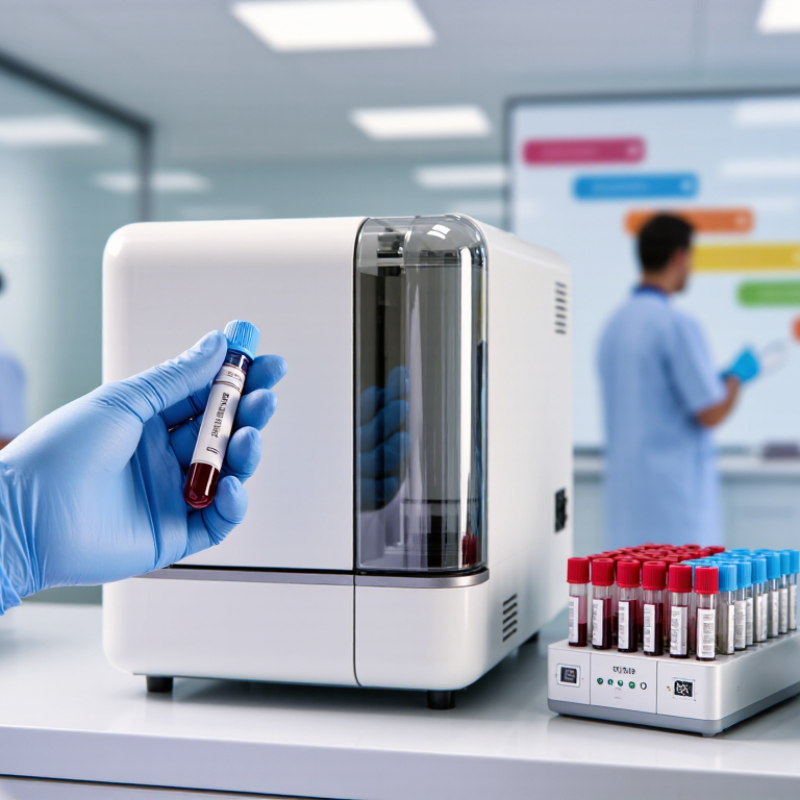
Before comparing platforms, define the decision a p-tau217 result should change. Is the assay intended to triage symptomatic patients, support a diagnostic work-up, or track change over time? These uses require different thresholds, workflows, and evidence. In a 2024 JAMA study of symptomatic patients, a blood-biomarker workflow identified Alzheimer’s pathology with about 90% accuracy, compared with 73% for clinicians’ assessments. The result reflects a tested workflow, not p-tau217 alone. That distinction is easy to miss.
Tips: Write the intended use in one sentence before reviewing assay specifications. Define who will be tested, what happens after a positive or negative result, and when confirmation with cerebrospinal fluid or PET is needed. Keep the clinical setting specific.
A p-tau217 result should be interpreted alongside symptoms, medical history, and pre-test likelihood—not as a stand-alone diagnosis. Decide how the assay handles borderline values and what follow-up clinicians can realistically provide. Kidney function and other patient factors may also affect interpretation, depending on the method. This part is less tidy than a comparison table suggests. Documenting uncertainty is better than implying a number answers everything.
How to Choose a Phosphorylated Tau 217 Assay in 2026?
Assay choice depends on more than the p-tau217 label. Immunoassays can suit routine, higher-throughput testing. Mass spectrometry can distinguish molecular forms, but may require specialist workflows. Antibodies, calibration, and sample handling can all affect results. The 2025 Alzheimer’s Association clinical practice guideline sets useful performance thresholds: triage tests should reach at least 90% sensitivity and 75% specificity; confirmatory tests should reach at least 90% for both. These are thresholds, not guarantees.
Plasma is practical for collection, but results may vary with tube type, processing delays, and freeze-thaw cycles. Serum is not automatically interchangeable with plasma. Cerebrospinal fluid offers a different clinical context and collection burden. Compare each assay’s validation data in the exact sample type you plan to use. Check whether the study population resembles your patients, and whether the cutoff was independently validated. A small mismatch can matter.
Tips: Ask for the assay’s intended use, sample requirements, and validated cutoff before comparing numbers. Keep collection and storage consistent. No platform is magic. Results should support clinical assessment, not replace it. That distinction is easy to miss.
Choosing a phosphorylated tau 217 assay in 2026 starts with a practical question: what decision should the result support? A test intended to help assess symptomatic patients may not be suitable for screening people without symptoms. Check whether validation included a population like the one you serve, with similar age, cognitive status, and relevant medical conditions. Numbers need context. Sensitivity and specificity can shift across populations and cutoffs, so look for confidence intervals and independent replication, not a single headline figure.
Analytical validation matters too. Review precision across runs, detection limits, sample type, and the effects of common interferences. Ask how blood was collected, stored, and processed; a delayed spin or repeated freeze-thaw cycle can complicate interpretation.
That gap matters.
Confirm that the clinical reference standard and intended use are clearly described, and determine whether the assay is for triage, diagnostic support, or another defined role. A polished accuracy estimate is not enough when the study population differs from the people being tested. Some reports leave practical questions unanswered; that should prompt careful review, not an assumption that the assay performs poorly. Compare evidence, workflow, and patient fit before adopting a result in clinical decisions.
How to Choose a Phosphorylated Tau 217 Assay in 2026?
Interpret Results Alongside Clinical and Diagnostic Evidence
A p-tau217 result is evidence, not a diagnosis. Choose an assay with published analytical validation, clear cutoffs, and documented performance in populations resembling your patients. Ask how age, kidney function, sample handling, and coexisting conditions may affect interpretation. Small differences matter.
In a 2024 JAMA study, Palmqvist and colleagues assessed blood biomarkers in 1,213 patients across primary and specialist care. A biomarker-based approach achieved about 90% diagnostic accuracy, compared with 61% to 73% for clinicians’ initial assessments. These results are promising, but they describe specific cohorts and methods—not a guarantee for every assay or clinic. Context matters.
Read the number beside the patient’s history, cognitive assessment, and functional changes. A borderline result may call for follow-up, not a confident label. Where clinically appropriate, clinicians can consider imaging or cerebrospinal fluid testing to clarify uncertain findings. The Alzheimer’s Association’s 2024 Facts and Figures estimated that 6.9 million Americans aged 65 and older were living with Alzheimer’s disease, underscoring the need for careful, accessible assessment. Yet more testing does not automatically mean better care. I would question any report that hides uncertainty behind a single “positive” cutoff.
How to interpret: This is a checklist, not a comparison of assay performance. Review the clinical picture, the specific assay’s validation and laboratory cutoff, relevant patient factors, and other diagnostic evidence. A p-tau217 result should not be interpreted in isolation; there is no universal cutoff across assays.
Before choosing a phosphorylated tau 217 assay, confirm that it is available for your intended sample type and setting. Access may differ between clinical laboratories and research facilities. Ask about specimen volume, collection tubes, shipping temperature, and stability after collection. A test that looks suitable on paper may not fit a site’s daily routine.
Map the workflow from sample arrival to result review. Check hands-on time, instrument needs, staff training, quality-control steps, and expected turnaround. Where possible, review validation data for the population and sample matrix you plan to use. Small workflow details matter. A delayed shipment or repeat run can change both timing and cost. Compare the cost per reportable result, not just the quoted price; include controls, repeat testing, and staff time. The comparison is rarely tidy.
Reporting requirements deserve equal attention. Confirm units, reference intervals or decision thresholds, and how indeterminate results are described. Ask whether reports explain limitations and avoid treating a biomarker result as a diagnosis by itself. Results should be interpreted with clinical context and other relevant findings. I would also check how changes to methods are communicated. That detail is easy to miss, and it can complicate comparisons over time.
| Assessment Dimension | Automated Immunoassay | Laboratory-Developed Immunoassay | Targeted Mass Spectrometry | What to Verify Before Selecting |
|---|---|---|---|---|
| Typical format | Instrument-based measurement of p-tau217 in a blood sample; some methods measure p-tau217 alone, while others report a ratio or combined result. | Laboratory-developed plate-based or other immunoassay configured to measure p-tau217 in blood. | Measures selected tau-derived peptides, often after sample preparation and enrichment; the measured peptide and calculation depend on the method. | Confirm the exact analyte, specimen type, and whether the reported result is a concentration, ratio, or multianalyte score. |
| Availability | Availability depends on the instrument, assay access, laboratory capacity, country, and applicable regulatory status. | May be available through specialist laboratories; access and service area are laboratory-specific. | Usually requires a laboratory with the relevant mass-spectrometry capability and a validated method; access may be more limited. | Ask whether testing is currently offered for your location and intended use, and verify the assay’s local regulatory and laboratory status. |
| Workflow | Designed for analyzer-based processing. Sample handling, run scheduling, and turnaround time vary by laboratory and platform. | Typically involves laboratory preparation and plate-based processing. Hands-on work and batch scheduling depend on the laboratory’s protocol. | Generally includes sample preparation, peptide measurement, and data processing. Workflow complexity depends on the method and laboratory setup. | Request specimen collection and shipping instructions, processing schedule, expected turnaround time, and procedures for repeat or inadequate samples. |
| Specimen requirements | Often uses plasma, but acceptable collection tubes, processing conditions, and stability limits are assay-specific. | Specimen type and handling limits are defined by the laboratory’s validated procedure. | Specimen type, preparation, storage, and shipping requirements are method-specific. | Use the performing laboratory’s instructions; do not assume that collection tubes or handling requirements are interchangeable across assays. |
| Cost considerations | No single price applies across laboratories or regions. The patient’s out-of-pocket cost may depend on coverage, billing policy, and clinical setting. | Pricing is set by the performing laboratory and may depend on testing, shipping, and any associated laboratory services. | Pricing is laboratory-specific and may reflect specialized instrumentation, sample preparation, and testing volume. | Obtain a written estimate covering the test, collection, shipping, interpretation, and potential repeat testing; confirm coverage directly with the payer and laboratory. |
| Result format | May be reported as a numerical value, a ratio, or an interpretation relative to assay-specific decision limits. | May include a numerical result and laboratory-defined interpretive categories. | May report peptide-derived measurements, ratios, or a laboratory-defined interpretation. | Check the units, reference or decision limits, whether the result is quantitative or categorical, and whether the limits are specific to that assay. |
| Cutoffs and comparability | Decision limits are method-specific and should not be assumed to transfer to another platform or laboratory. | Interpretive limits depend on the laboratory’s validation and intended-use criteria. | Interpretation depends on the measured peptides, analytical method, and laboratory validation. | Ask how the decision limits were established and whether results can be compared with prior tests performed using a different method. |
| Reporting requirements | Request a report identifying the specimen, analyte or ratio, units, method, interpretive limits, and relevant limitations. | The report should state that the method is laboratory-developed where applicable and provide its interpretive framework and limitations. | The report should identify the measured peptide(s) or derived result, units or calculation, interpretive limits, and method limitations. | Confirm that the report supports the intended clinical use and includes sufficient information for interpretation by the treating clinician. |
| Clinical interpretation | Interpret with the patient’s clinical history and the assay’s intended-use information; a blood result alone does not establish a diagnosis. | Interpret according to the performing laboratory’s validated method and the clinical context. | Interpret according to the laboratory’s method-specific validation and the clinical context. | Ask how an indeterminate or discordant result is handled and whether additional assessment may be appropriate under local clinical guidance. |
| Practical fit | Consider when a suitable analyzer-based service is accessible and its specimen and reporting requirements fit the clinical workflow. | Consider when a validated specialist-laboratory service is accessible and its workflow and report meet the intended need. | Consider when a suitable validated mass-spectrometry service is accessible and its method-specific output is appropriate for the question. | Choose based on verified access, validated performance for the intended use, workflow, total cost, and report clarity—not on the assay category alone. |
Important: Assay availability, regulatory status, specimen requirements, decision limits, and costs vary by jurisdiction and performing laboratory. p-tau217 results should be interpreted by a qualified clinician in context; no universal cutoff or price applies across methods.
