
China Top Hospital Equipment Rental Suppliers?

China is becoming a serious sourcing market for Hospital Equipment Rental, especially for imaging, patient monitoring, respiratory care, and intensive-care equipment. Hospitals may reduce capital pressure while accessing newer devices. The decision is not simple.

Grand View Research estimates that the global medical equipment rental market will continue expanding through 2030, supported by rising healthcare costs and demand for flexible procurement. Fortune Business Insights also identifies aging populations, outpatient care, and technology upgrades as major growth drivers. However, market estimates vary. Definitions differ between hospital rentals, home-care rentals, and short-term leasing.

That matters when comparing China’s top suppliers.

A credible supplier should show maintenance records, equipment serial numbers, calibration certificates, delivery coverage, and replacement procedures. Ask for evidence. Not promises. For an MRI system, buyers should examine installation conditions, coil availability, downtime response, and engineer qualifications. For ventilators, filter replacement and emergency support require equal attention.

The World Health Organization has repeatedly stressed the importance of having “the right technology, in the right place, at the right time.” Dr. Margaret Chan, former WHO Director-General, often connected this principle with practical healthcare access. It applies directly to equipment rental.

The strongest Chinese suppliers combine inventory depth with documented service capability. Some may offer attractive prices but limited after-sales support. That weakness can become expensive during a critical admission.

This guide evaluates leading China-based Hospital Equipment Rental suppliers through service experience, product range, compliance documentation, response time, and customer reliability. Rankings remain imperfect. Regional coverage and contract terms can change quickly. Always verify current certifications and local service capacity before signing.
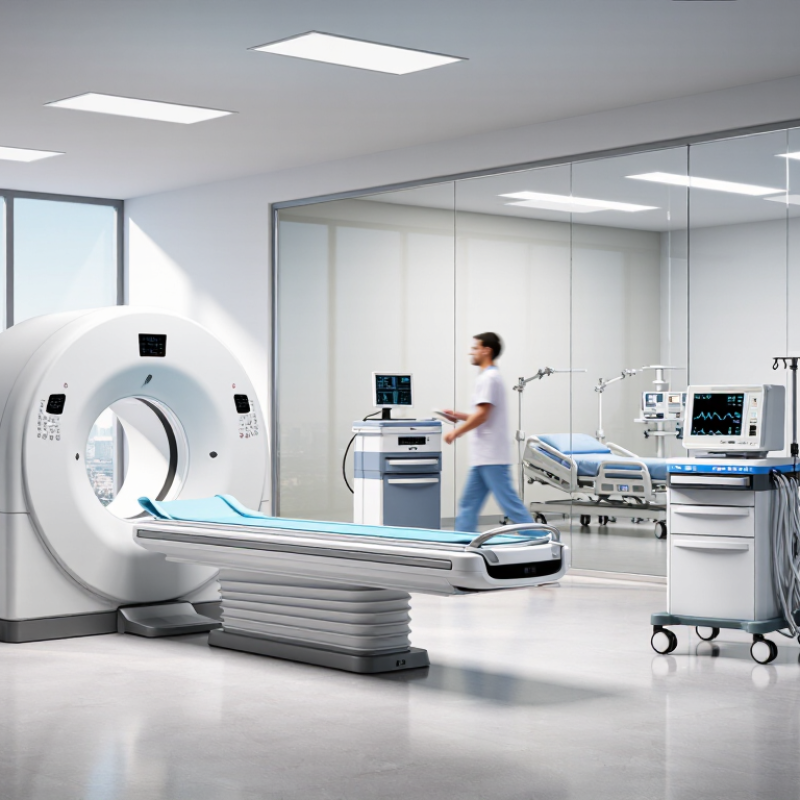
China Top Hospital Equipment Rental Suppliers?

Definition and Scope of Hospital Equipment Rental in China

China’s hospital equipment rental market covers the temporary or long-term use of medical devices without ownership transfer. The scope includes imaging systems, patient monitors, ventilators, operating-room equipment, and rehabilitation devices. Contracts may also include delivery, installation, maintenance, calibration, training, and replacement support. These details matter more than the monthly price.

Demand is linked to China’s large healthcare system. The National Health Commission reported 38,355 hospitals in 2023, while national health expenditure reached about RMB 9.06 trillion. Hospitals often rent equipment during renovations, seasonal demand, clinical trials, or budget delays. Smaller facilities may also avoid heavy upfront investment. Rental suppliers therefore need documented maintenance records, equipment traceability, response-time commitments, and trained service engineers. A low-cost offer is not automatically practical.

The market remains difficult to measure. China does not publish one unified official statistic for hospital equipment rental alone. Industry reports often combine leasing, equipment services, and financial arrangements, which can distort comparisons. Buyers should check whether quoted data refers to revenue, installed units, or contract value. That distinction is easy to miss. In practice, supplier evaluation should examine regulatory registration, inspection certificates, insurance, data security, and end-of-contract handling. Some rental agreements still lack clear responsibility for calibration failures. This weakness deserves closer review.

Key Types of Medical Equipment Available for Rental

Hospital equipment rental suppliers support hospitals during expansion, emergencies, renovations, and temporary capacity changes. The right equipment depends on patient needs, clinical routines, and available space. Experienced suppliers should provide delivery records, operating instructions, and maintenance evidence. Reliability begins before the machine reaches the ward.

Patient beds and pressure-relief mattresses are common rental choices. Adjustable beds help nurses reposition patients with less physical strain. Pressure-relief systems support patients with limited mobility. Wheelchairs, walkers, and transfer aids can improve safe movement between rooms. Fit matters. A narrow corridor can make a suitable device unusable.

Respiratory equipment may include oxygen concentrators, suction machines, nebulizers, and non-invasive ventilation units. Monitoring options can include vital-sign monitors, pulse oximeters, and portable electrocardiogram devices. Infusion pumps are also rented when short-term treatment capacity increases. Each device needs inspection, cleaning, calibration, and user training. Check twice. A missing accessory can delay care. In my experience, suppliers sometimes describe equipment too generally, so hospitals should request exact model specifications, compatible accessories, service response times, and replacement procedures. Rental agreements should identify responsibility for faults and infection-control preparation. Not every rental is economical. Daily fees, transport, setup, and staff training may exceed the cost of ownership for long projects. Hospitals should compare the full operating cost, not just the advertised rate.

China Top Hospital Equipment Rental Suppliers? - Key Types of Medical Equipment Available for Rental
Equipment Category Typical Rental Equipment Primary Clinical Applications Common Rental Period Usually Included in Rental Pre-Rental Inspection Points Rental Availability
Patient Monitoring Multiparameter patient monitor with ECG, SpO₂, non-invasive blood pressure, temperature, and respiratory-rate monitoring Operating rooms, intensive care units, emergency departments, recovery rooms, and general wards Several days to 12 months Monitor, power cable, accessories, user manual, basic technical support, and functional testing Alarm operation, sensor condition, battery capacity, display accuracy, electrical safety, and data connectivity High
Ventilators Invasive ventilator, non-invasive ventilator, and transport ventilator Mechanical ventilation for intensive care, emergency transport, postoperative care, and respiratory support One week to 12 months Ventilator, breathing circuit options, humidification accessories where applicable, setup, and operator training Self-test results, oxygen and air supply compatibility, pressure accuracy, alarm function, battery backup, and preventive maintenance status Medium to High
Infusion Therapy Volumetric infusion pump, syringe pump, enteral feeding pump, and PCA pump Controlled delivery of fluids, medicines, nutrition, analgesics, and chemotherapy under hospital protocols One week to 24 months Pump unit, power supply, mounting accessories, administration-set compatibility information, and user training Flow-rate accuracy, occlusion alarm, air-in-line detection, anti-free-flow protection, battery condition, and cleaning status High
Oxygen Therapy Oxygen concentrator, oxygen manifold, oxygen humidifier, and portable oxygen delivery equipment Long-term oxygen therapy, respiratory wards, home-care programs, and temporary capacity expansion One week to 24 months Core oxygen device, tubing or compatible accessories, operating instructions, delivery setup, and maintenance support Oxygen concentration, output flow, alarms, filter condition, operating noise, power requirements, and backup arrangements High
Diagnostic Ultrasound Portable ultrasound system, cart-based ultrasound system, and specialty probes Abdominal, obstetric, cardiac, vascular, musculoskeletal, and point-of-care examinations One week to 12 months System console, selected transducers, monitor, software configuration, delivery, installation, and application training Image quality, probe integrity, electrical safety, software functions, data export, disinfection compatibility, and calibration records Medium to High
Electrosurgery Electrosurgical generator, monopolar and bipolar accessories, and smoke evacuation unit General surgery, gynecology, urology, dermatology, and other procedures requiring tissue cutting or coagulation Per procedure, several days, or one to 12 months Generator, foot switch, cables, compatible accessories, safety checks, and technical support Output modes, power accuracy, patient-plate monitoring, alarm function, cable condition, and grounding safety Medium
Anesthesia Systems Anesthesia workstation, anesthesia gas monitoring equipment, and related breathing systems General anesthesia, operating rooms, day-surgery units, and temporary operating-room capacity One week to 12 months Workstation, breathing circuit options, vaporizer configuration where applicable, installation, testing, and user training Leak test, ventilator performance, oxygen failure protection, gas-flow accuracy, alarms, scavenging connection, and service records Medium
Defibrillation and Resuscitation Manual defibrillator, automated external defibrillator, and resuscitation trolley equipment Cardiac arrest response, emergency departments, ambulances, intensive care, and public-access emergency programs One month to 24 months Defibrillator, paddles or pads, ECG accessories, charger, carrying case, and functional testing Energy output, ECG acquisition, charging time, battery capacity, self-test records, synchronization function, and pad expiration dates High
Hospital Beds and Patient Handling Electric hospital bed, intensive-care bed, pressure-relieving mattress, patient lift, and bedside table Inpatient wards, intensive care, rehabilitation, home care, and temporary bed-capacity expansion One month to 36 months Bed or handling device, mattress where specified, side rails, handset, delivery, assembly, and basic maintenance Brake function, motor movement, side-rail locking, safe working load, mattress condition, castors, and electrical safety High
Sterilization and Decontamination Steam sterilizer, washer-disinfector, ultrasonic cleaner, and low-temperature sterilization equipment Central sterile services departments, dental facilities, operating rooms, and temporary sterilization capacity One month to 24 months Equipment, installation, commissioning, operating instructions, validation support, and maintenance plan Chamber integrity, temperature and pressure records, cycle performance, water quality requirements, safety interlocks, and validation documentation Medium
Neonatal Care Infant incubator, neonatal warmer, phototherapy unit, and neonatal monitoring equipment Neonatal intensive care, maternity departments, pediatric wards, and temporary newborn-care capacity One week to 12 months Core device, temperature-control accessories, monitoring connections, setup, cleaning guidance, and staff training Temperature stability, humidity control where applicable, alarm operation, radiant-heat output, mattress condition, and sensor accuracy Medium
Respiratory and Airway Care Nebulizer, suction pump, airway clearance device, and high-flow oxygen system Respiratory wards, emergency care, postoperative recovery, pulmonary rehabilitation, and home care One week to 12 months Core device, tubing or collection accessories where applicable, operating instructions, cleaning guidance, and technical support Vacuum or flow performance, filter condition, alarm operation, noise level, battery backup, and infection-control suitability High

Rental availability, configuration, service coverage, training, consumables, and delivery terms vary by location, equipment condition, clinical application, and hospital procurement policy. Disposable items and procedure-specific consumables are commonly charged separately.

How to Evaluate China’s Hospital Equipment Rental Suppliers

Evaluating China’s hospital equipment rental suppliers requires more than comparing monthly prices. Start with equipment fit. Ask for model numbers, manufacturing dates, operating hours, and maintenance records. A supplier should explain whether each device is new, refurbished, or previously leased. Request inspection photos, but do not rely on photos alone. For critical devices, arrange an independent functional test before delivery. Small details matter, including alarm volume, battery health, wheel locks, cable condition, and included accessories.

Professional credibility appears in documentation and technical support. Check calibration certificates, electrical safety reports, user manuals, and cleaning procedures. Confirm whether technicians can respond in your region. Ask how quickly replacement units arrive. Ask who performs preventive maintenance and where service records are stored. Vague answers deserve caution. A polished website is not evidence of dependable operations. Speak with recent hospital or clinic customers when possible, using verifiable references instead of anonymous testimonials.

Rental contracts need equal attention. Review deposits, delivery responsibilities, insurance, breakdown response, late-return charges, and data protection duties. Define acceptance criteria in writing, including performance tests at handover. Confirm whether consumables, training, installation, and removal are included. The cheapest offer may become expensive after transport and downtime. Test communication before signing; delayed replies can signal weak support later. No evaluation is perfect. Keep a scoring sheet, record unanswered questions, and revisit assumptions after the first rental cycle.

Rental Costs, Contract Terms, and Service Coverage

China Top Hospital Equipment Rental Suppliers? Rental Costs, Contract Terms, and Service Coverage

Hospital equipment rental prices in China depend on equipment type, usage period, location, and service depth. Industry estimates from Grand View Research place the global medical equipment rental market at over USD 50 billion in recent years, with continued growth expected. However, China-specific quotations can vary widely. A mobile ultrasound system may cost several thousand yuan monthly, while advanced imaging equipment requires a tailored quotation. Always request a cost breakdown. Delivery, installation, calibration, training, insurance, and emergency repairs may be charged separately.

Contract terms deserve close attention. A practical agreement should define equipment condition, uptime targets, preventive maintenance, replacement timelines, and responsibility for accidental damage. The World Health Organization stresses that maintenance systems are essential for safe medical-device performance. Service coverage should include certified technicians, spare-parts access, remote support, and on-site response times. Rural hospitals may need longer response windows. That detail can affect clinical continuity. Some contracts appear inexpensive but exclude weekend support. I have seen buyers focus on monthly rent and overlook return logistics. That is an expensive mistake.

Tips: Compare three written quotations with identical specifications. Ask for recent service records, calibration certificates, and a sample incident report. Confirm whether consumables are included. Review renewal pricing carefully. Industry reports provide useful benchmarks, but real hospital usage should guide the final decision. A short trial period can expose workflow problems before a long contract begins.

Regulatory, Safety, and Delivery Considerations in China

Choosing top hospital equipment rental suppliers in China requires more than comparing daily prices. Regulatory readiness should come first. Ask whether each device has appropriate NMPA registration or filing, where applicable. Request certificate details, service records, and the legal entity named in the contract. Provincial requirements may vary, so local compliance advice is valuable.

Before delivery, inspect equipment condition and safety controls. Look for intact seals, readable labels, working alarms, and undamaged power cables. Demand cleaning, disinfection, maintenance, and calibration records. Calibration records matter. Ask who responds when a monitor fails at night. That question is often overlooked. Staff training should cover alarms, battery changes, emergency shutdowns, and safe storage. Do not accept a device that arrives without clear operating instructions. Yet paperwork alone cannot prove safe use; practical inspection still matters.

Reliable delivery depends on warehouse location, transport planning, and communication. Confirm delivery windows, installation support, return procedures, and backup plans before signing. For beds, monitors, infusion pumps, and respiratory equipment, check whether transport conditions protect sensitive parts. On arrival, record serial numbers, accessories, and visible damage. Photographs help. Still, no checklist is perfect. An experienced hospital team should test equipment under realistic conditions, not only switch it on. Small gaps in handover procedures can create serious delays during busy clinical hours.

China Medical Device Risk Classes: Regulatory, Safety, and Delivery Implications

China classifies medical devices into Class I, Class II, and Class III according to risk level. Class I devices generally follow a filing process, while Class II and Class III devices require registration before compliant use or supply. When renting hospital equipment, verify the device classification, applicable NMPA filing or registration status, maintenance records, safety testing, accessories, and delivery readiness.

The chart uses an ordinal risk scale: 1 = low risk, 2 = moderate risk, and 3 = high risk. Classification applies to the medical device, not to a rental company. Reference: China’s Regulations on the Supervision and Administration of Medical Devices, State Council Order No. 739.