
Click here to browse our On The Mend Portfolio!
Global buyers comparing China Best Roll Filter Media Suppliers for Global Buyers? should look beyond price sheets and polished factory photos. Roll Filter Media must fit the equipment, airflow, dust load, and replacement schedule. A roll that looks uniform under warehouse lights can still vary in thickness or pressure drop across its width. Small details matter.
Grand View Research estimated the global air filters market at USD 15.31 billion in 2023 and projected a 7.2% compound annual growth rate through 2030. This figure covers the broader air-filter market, not roll media alone, so it should not be treated as a direct measure of media demand. It does, however, show why buyers need reliable specifications and consistent supply. Aerosol scientist Dr. William C. Hinds, author of Aerosol Technology, provides a useful technical lens: filtration performance depends on particle behavior and the conditions in which a filter operates.
A practical supplier review should examine fiber composition, basis weight, thickness, initial pressure drop, dust-holding capacity, and test methods. Ask for recent batch records and samples. Then check whether the reported results match your intended airflow and operating environment. A neat certificate is not enough. Some specifications remain difficult to compare across suppliers, and buyers should say so rather than assume equivalence. This guide examines supplier selection, quality checks, communication, and shipping considerations, helping global purchasers assess Chinese Roll Filter Media suppliers with clearer questions and more grounded expectations.
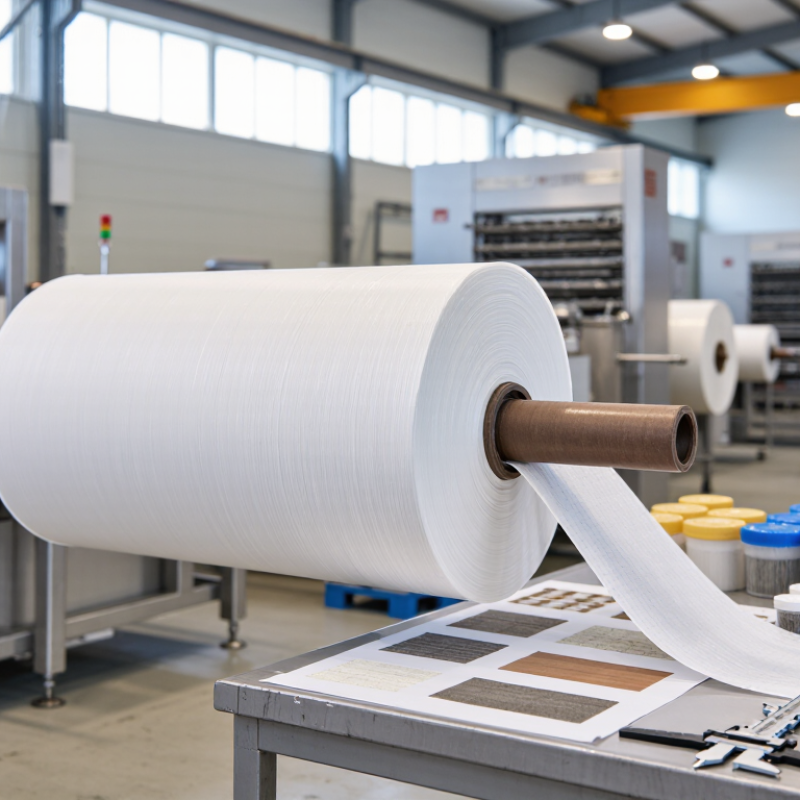
Roll filter media is a continuous sheet of fibrous material supplied on a core. It advances through a filtration system as dust or droplets collect on its surface. When the loaded section reaches a set pressure drop, the media moves forward and exposes a clean area. Simple in principle. The real performance depends on the application.
In ventilation systems, roll media can capture airborne dust before it reaches fans, coils, or occupied work areas. In paint booths and manufacturing lines, the required fiber structure and media depth may differ. A coarse pre-filter can protect downstream filters, while finer media can capture smaller particles. Operators should consider airflow, dust load, humidity, and replacement frequency together. A filter that is too restrictive may increase energy use.
Selection should be based on operating conditions, not efficiency claims alone. Check the media’s pressure drop, dust-holding capacity, dimensions, and compatibility with the equipment. Inspect used media, too; uneven loading can point to airflow problems or poor installation. One detail is easy to miss: local dust conditions change over time. Regular monitoring helps, though it cannot replace good system design.
Chinese suppliers commonly offer polyester, polypropylene melt-blown, fiberglass, activated-carbon composite, and washable mesh filter media in rolls. Polyester nonwovens suit general HVAC pre-filtration; buyers can specify weight, thickness, and roll width. Fiberglass media is common in paint-booth arrestors, where its graded structure captures overspray while allowing airflow. Melt-blown polypropylene provides fine fiber layers for compact filtration. Carbon-treated media helps reduce odors, but it is not a substitute for a properly sized gas-phase system. The trade-off is real.
MarketsandMarkets’ Air Filters Market report estimates growth from USD 10.8 billion in 2023 to USD 14.3 billion by 2028, a 5.8% compound annual growth rate. This figure covers air filters broadly, not roll media alone, but it signals ongoing demand for filtration components. Buyers should request basis weight, thickness, pressure-drop data, and efficiency test conditions. An efficiency number without test details is hard to compare. ISO 16890 classifications apply to finished air filters, so a media roll should not automatically be treated as a certified filter.
For sampling, check whether the roll unwinds evenly and whether its fibers shed during cutting. Ask suppliers for batch-specific test reports and confirm whether the quoted efficiency applies to the raw media or a finished element. I would not choose on price per square meter alone; pressure drop and service life can change the real cost. A small trial run helps.
| Media Type | Common Composition and Structure | Typical Characteristics | Common Applications | Key Selection Considerations |
|---|---|---|---|---|
| Synthetic Nonwoven Media | Usually polyester or a blend of synthetic fibers formed into a nonwoven web; may have a uniform or layered structure. | Lightweight and generally resistant to moisture. Available in different thicknesses and weights for coarse or prefiltration duties. | HVAC prefilters, ventilation systems, air handling units, and general industrial air intake. | Check the required airflow, dust-holding capacity, thickness, roll dimensions, and compatibility with the filter frame or converting process. |
| Progressive-Density Synthetic Media | Layered or gradient-density polyester or other synthetic fibers, with a more open structure on the air-entry side and a denser structure downstream. | Uses depth loading to distribute captured dust through the media. Available in a range of grades and constructions. | Commercial HVAC systems, ventilation equipment, and applications where longer service intervals than basic flat media are desired. | Confirm airflow resistance and dust-loading performance using test data for the exact grade; these vary with media weight, thickness, and construction. |
| Fiberglass Media | Randomly arranged glass fibers, commonly supplied as flat filter media in rolls. | Often used for coarse filtration and prefiltration. Performance and handling properties depend on fiber diameter, binder, and media density. | Paint spray booths, general ventilation, and prefilters for downstream filtration stages. | Review fiber containment, binder and temperature limits, airflow resistance, and applicable safety requirements for the intended installation. |
| Cellulose or Cellulose-Blend Media | Paper-like media made from cellulose fibers, sometimes blended with synthetic fibers or treated to modify handling or moisture behavior. | Can provide a relatively stiff web and is used in several air and liquid filtration formats. Properties depend on fiber blend and treatment. | Industrial air filtration, liquid filtration, and applications where a paper-based media construction is suitable. | Specify the fluid or air application, operating temperature, moisture exposure, required filtration performance, and any treatment requirements. |
| Meltblown Polypropylene Media | Fine polypropylene microfibers formed into a nonwoven web; often supplied in multiple layer or graded constructions. | Common in liquid filtration and some air-filtration products. Polypropylene offers broad chemical compatibility, but suitability depends on the fluid and operating conditions. | Liquid filter cartridges, prefiltration, and selected industrial filtration applications. | For liquid use, verify the stated retention rating and test method, chemical compatibility, temperature limits, and pressure requirements. |
| Activated Carbon-Impregnated Media | Nonwoven carrier media containing or coated with activated carbon particles. | Designed to adsorb certain gases and odors; it is not a substitute for particle filtration unless the construction also provides that function. | Odor control, ventilation systems, and selected air-treatment applications. | Match the carbon type and quantity to the target contaminant. Confirm contact time, airflow, humidity conditions, and replacement requirements. |
| Tackified Synthetic Media | Synthetic nonwoven fibers treated with a tackifying agent to help retain captured dust. | Typically used as a coarse prefilter. The tackifier and media construction influence dust retention and service conditions. | HVAC prefiltration, equipment intake protection, and selected paint or industrial ventilation systems. | Check whether the tackifier is suitable for the process, including temperature, airflow, and downstream contamination-control requirements. |
| Buyer note: These are general media categories, not guaranteed product specifications. Request data for the exact grade, including composition, thickness, basis weight, roll width and length, pressure drop, filtration test method, operating limits, and any required compliance documents. Performance varies by construction and test conditions. | ||||
For global buyers, roll filter media should be judged by tested performance, not a headline efficiency claim. Ask suppliers for particle-size efficiency, pressure-drop, dust-holding, and test-method data.
The U.S. EPA’s MERV guidance, using ASHRAE particle-size categories, lists minimum capture efficiencies of 50% for 0.3–1 μm particles and 85% for 1–3 μm particles at MERV 13–16. These figures help frame comparisons, but they do not guarantee that every roll performs alike. A lab number is not the whole story.
Quality also shows up in the roll itself. Check media weight, thickness, fiber consistency, edge condition, and roll-to-roll variation. Request test reports tied to the supplied product, plus samples for your own line trials.
Monitor pressure drop at the airflow your equipment actually uses; excessive resistance can raise energy demand or shorten service intervals. Even reliable figures can be hard to compare when test conditions differ. That deserves a second look.
Tips: Unroll a sample and inspect it against a light. Look for thin patches, loose fibers, and uneven bonding. Confirm roll width, length, packaging, and batch traceability before shipment. Then test it in your equipment. Small checks can prevent costly surprises.
Evaluating China-based roll filter media suppliers starts with evidence, not polished samples. The WHO 2022 air quality database reported that 99% of the global population lived where its air-quality guideline levels were exceeded. This raises the value of traceable performance data. Ask for a current technical data sheet, test method, and batch-specific certificate. Small details matter.
Compare basis weight, thickness, air permeability, tensile strength, and pressure drop under stated test conditions. Request roll-width tolerances, splice frequency, core size, and packaging photos. For finished filters, ASHRAE Standard 52.2-2017 defines MERV testing. MERV 13 requires minimum efficiencies of 50%, 85%, and 90% across its three particle-size ranges. Raw-media results do not equal finished-filter ratings. Keep that distinction clear.
Ask how the supplier controls fiber blend and lot variation. Request data from three production lots, not one ideal sample. Check capacity against actual lead-time records, not a sales promise. A video call can show winding tension and edge trimming, but it cannot replace independent testing. One awkward truth: buyers sometimes overvalue a perfect sample. Test again after shipment; rolls may behave differently after storage.
When sourcing roll filter media from China, define the operating conditions before comparing quotations.
Share the target airflow, dust type, temperature, humidity, required efficiency, and pressure-drop limit. Then confirm fiber composition, thickness, basis weight, roll width, core diameter, and allowable variation. A roll that fits the drawing may still behave differently on a production line. Request a sample and test it on the intended equipment.
MarketsandMarkets projected the global air filters market to grow from USD 14.3 billion in 2023 to USD 20.3 billion by 2028, at a 7.2% annual rate. That broad market figure is not a forecast for roll media alone, but it signals why clear specifications matter to buyers.
For customization, ask suppliers to document test methods, batch identification, and inspection results, then agree on tolerances before production. Avoid relying on a single efficiency figure; test pressure drop and dust-holding performance too. Small details matter.
For shipping, confirm roll diameter, pallet size, gross weight, moisture-resistant wrapping, and loading limits. These affect container planning and the risk of crushed edges or damp media. Agree on shipment terms, lead time, export documents, and who pays for port delays before placing the order. A trial shipment can expose packing problems early.
Even a careful checklist is imperfect; real production conditions may reveal what samples and documents miss.
