
Click here to browse our On The Mend Portfolio!
Choosing the China best Ankle Splint manufacturer requires more than comparing factory prices. Product safety, clinical usability, documentation, and supply reliability matter equally. The World Health Organization reports that approximately 1.71 billion people live with musculoskeletal conditions worldwide. This figure explains the growing need for dependable ankle support products.
Market evidence also supports careful sourcing. Grand View Research identifies orthopedic braces and supports as a growing healthcare segment, driven by sports injuries, aging populations, and rehabilitation demand. Ankle splints now serve hospitals, physiotherapy clinics, sports retailers, and home-care users. Buyers should examine materials, hinge performance, padding comfort, size accuracy, and skin-contact safety. A splint that looks strong may still create pressure points after several hours.
Experienced manufacturers usually provide product drawings, testing records, traceability systems, and controlled production procedures. ISO 13485 certification can indicate a structured medical-device quality system, although certification alone does not guarantee excellent products. Samples deserve practical review. Check the stitching, edge finishing, hook-and-loop strength, and packaging after repeated use. Ask whether the supplier can maintain consistent dimensions across large orders.
No supplier is perfect. That matters. A serious manufacturer should discuss limitations openly, including minimum order quantities, lead times, customization risks, and replacement policies. Global buyers should also verify applicable market requirements independently. Reports provide useful direction, but factory audits and real-world testing reveal more. The right China Ankle Splint partner combines manufacturing experience, responsive communication, documented quality controls, and a willingness to improve when feedback exposes weaknesses.
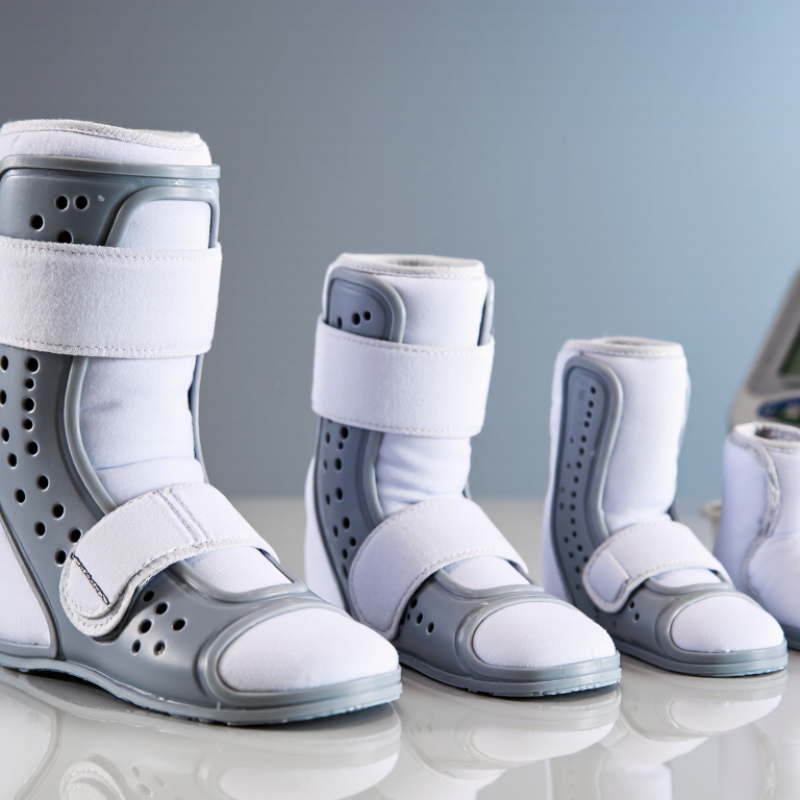
Ankle splints serve different clinical purposes, so selection should begin with injury assessment, not appearance. A lace-up splint provides adjustable compression and limits inversion. It often supports mild sprains, sports recovery, and daily walking. An air-stirrup splint uses rigid side shells and air cells. It helps control swelling while protecting the ankle from sideways movement. This design may suit moderate sprains when weight bearing remains possible. Fit matters greatly. A loose brace can slide, while a tight one can irritate skin.
A rigid posterior splint holds the ankle in a stable position after acute injury. Clinicians may use it when swelling is expected, because straps allow later adjustment. A walking boot offers stronger immobilization for fractures, tendon injuries, or severe sprains under clinical direction. It should not replace imaging or professional diagnosis. Compression sleeves are lighter and mainly support edema control, warmth, and proprioception. They are less suitable when firm immobilization is required. Breathable lining, smooth edges, and washable padding can improve consistent use.
No selection guide is perfect. For global buyers, a capable manufacturer should document material safety, size ranges, load testing, and quality-control records. Medical applications vary by age, circulation, skin condition, and rehabilitation stage. Instructions should explain fitting, cleaning, warning signs, and when to seek clinical review. Real-world testing is valuable, yet laboratory data cannot predict every patient experience. In practice, simple designs are easier to fit correctly, though they may offer fewer adjustment options. That trade-off deserves honest review. A product can look supportive and still fail if the heel lifts or pressure concentrates near the malleolus.
China Best Ankle Splint Manufacturer for Global Buyers?
Key Materials and Design Features in Ankle Splint Manufacturing
For global buyers, material selection should begin with clinical function, not appearance. The World Health Organization estimates that 1.71 billion people live with musculoskeletal conditions worldwide. Ankle support therefore requires practical, repeatable design decisions. A 2021 clinical practice guideline in the Journal of Orthopaedic & Sports Physical Therapy supports external ankle supports during early rehabilitation for many lateral ankle sprains.
Nylon, polyester, and elastic fibers provide flexible compression. Neoprene offers warmth, but it may retain heat in humid climates. Breathable spacer fabric can improve airflow around the heel and malleoli. Thermoplastic polyurethane supports structured panels, while lightweight aluminum stays can limit unwanted inversion. EVA foam adds cushioning around pressure points. Small details matter.
A manufacturer should verify seam strength, dimensional stability, skin contact, and repeated fastening cycles. ISO 10993 provides a useful framework for evaluating materials that contact skin, when applicable. Laboratory results are valuable, but not complete. A splint can pass testing and still rub a swollen ankle. Adjustable straps, rounded edges, and washable liners deserve equal attention. Overly rigid designs may restrict useful movement. Softer designs may provide insufficient control. Buyer feedback from athletes, clinics, and daily users should guide revisions, because no single material works perfectly for every climate, activity, or body shape.
| Manufacturing Dimension | Common Material or Specification | Relevant Material Properties | Key Design Features | Typical Quality-Control Considerations |
|---|---|---|---|---|
| Structural support frame | Polypropylene, polyethylene, or glass-fiber-reinforced polymer | Low density, moldability, impact resistance, and controlled stiffness | Anatomically contoured sidewalls; rounded edges; open heel or low-profile geometry where appropriate | Dimensional accuracy, absence of sharp edges, consistent wall thickness, and resistance to cracking during repeated flexing |
| Padding and skin-contact layer | EVA foam, polyurethane foam, spacer fabric, or breathable textile laminates | Cushioning, pressure distribution, moisture management, and comfort during extended wear | Removable or replaceable pads; ventilation zones; smooth seams; pressure-relief areas around malleoli | Uniform foam thickness, secure bonding or stitching, low surface abrasion, and resistance to compression set |
| Straps and fastening system | Nylon or polyester webbing with hook-and-loop fasteners; thermoplastic buckles where required | Tensile strength, abrasion resistance, adjustability, and repeated fastening performance | Cross-over straps, wide load-distribution zones, one-handed adjustment, and clearly defined strap routing | Stitch strength, fastening-cycle durability, strap slippage, edge fraying, and secure attachment to the shell |
| Stabilizing hinges or motion-control elements | Polymer hinge components, stainless-steel pins, or lightweight aluminum parts | Controlled range of motion, wear resistance, corrosion resistance, and mechanical stability | Medial and lateral support; optional motion stops; low-profile hinge covers to reduce snagging | Smooth movement, pin retention, absence of excessive play, corrosion checks, and repeat-cycle testing |
| Footbed and sole interface | EVA, polyurethane, rubber, or textured thermoplastic elastomer | Shock absorption, slip resistance, flexibility, and compatibility with footwear | Contoured foot platform, textured outsole, heel stabilization, and reduced bulk under footwear | Slip-resistance assessment, bonding strength, outsole wear, dimensional stability, and floor-contact uniformity |
| Anatomical fit and sizing | Size ranges based on foot length, ankle circumference, or user-specific measurement charts | Consistent fit, pressure distribution, and compatibility with different ankle profiles | Left/right configurations where needed; contoured heel cup; adjustable circumference; clear size markings | Fit trials across the declared size range, measurement repeatability, and verification of left/right orientation |
| Breathability and thermal comfort | Perforated polymer panels, 3D spacer mesh, moisture-wicking polyester, and ventilation channels | Air permeability, moisture transport, reduced heat accumulation, and improved wear comfort | Ventilated shell sections, mesh panels, open heel design, and moisture-resistant removable liners | Vent opening consistency, textile colorfastness, odor control, cleanability, and material compatibility |
| Skin safety and material selection | Skin-contact textiles, medical-use foams, non-latex elastic components, and corrosion-resistant hardware | Low irritation potential, cleanability, durability, and suitability for prolonged contact | Minimal exposed hardware; covered seams; smooth contact surfaces; removable washable liners | Biocompatibility evaluation appropriate to intended use, chemical screening, odor inspection, and residue control |
| Cleaning and maintenance | Washable polyester, polyurethane-coated textiles, corrosion-resistant fasteners, and nonabsorbent polymers | Resistance to mild detergents, moisture, repeated drying, and routine handling | Tool-free pad removal; washable straps; drainage or ventilation openings; concise care instructions | Material change after cleaning cycles, color transfer, fastener function, corrosion, and adhesive degradation |
| Manufacturing process control | Injection molding, thermoforming, die cutting, sewing, ultrasonic welding, and adhesive bonding | Repeatable geometry, stable assembly quality, efficient production, and traceable inspection | Defined process parameters, standardized jigs, controlled trimming, and documented assembly instructions | Incoming-material inspection, first-article approval, in-process checks, final inspection, and batch traceability |
| Packaging and global shipment readiness | Recyclable carton, protective tissue or polybag, printed instructions, and moisture-resistant secondary packaging | Protection from deformation, contamination, moisture, and abrasion during storage and transportation | Size and side identification; barcode or lot field; multilingual labeling; compact nested packing where suitable | Drop and compression checks, label accuracy, carton integrity, lot identification, and packaging cleanliness |
| Regulatory and documentation readiness | Technical drawings, bill of materials, risk documentation, inspection records, and user instructions | Supports product consistency, market-specific conformity assessment, and post-market traceability | Documented intended use, contraindication information where applicable, fitting instructions, and care guidance | Documentation should align with the destination market, product classification, applicable standards, and importer requirements |
China Best Ankle Splint Manufacturer for Global Buyers?
How Leading Manufacturers Control Product Quality and Safety
A dependable ankle splint manufacturer treats safety as a daily process, not a marketing claim. Experienced production teams inspect fabric, foam, plastic, straps, and fasteners before assembly. Each material should match approved specifications and supplier records. Workers also check stitching tension, edge finishing, and joint movement during production. A loose seam or sharp edge can create discomfort after repeated use. Finished splints need dimensional checks, load testing, and wear simulations. These tests reveal failures that visual inspection may miss. Batch numbers and inspection records improve traceability when problems appear.
No process is flawless. That matters. Manufacturers should review complaints, returned samples, and near-misses instead of hiding them. Independent laboratory testing can support internal checks, especially for skin-contact materials and structural performance. Clear user instructions, suitable sizing, and protective packaging also reduce avoidable risks. Buyers can request recent test reports, quality procedures, corrective-action records, and factory inspection evidence. Transparent answers often show more reliability than polished promises.
Tips: Ask for a sample from regular production, not a specially prepared unit. Measure it, flex it, and inspect the seams under bright light. Check whether the size chart matches the physical product. Confirm how nonconforming units are separated and recorded. A factory may pass one inspection yet still need stronger process control. Good suppliers accept that criticism and keep improving.
For global ankle splint buyers, compliance begins long before shipment. A capable manufacturer should provide a current quality management certificate, such as ISO 13485, with a verifiable certificate number. The certificate should match the legal manufacturer, production site, and product scope. An old address creates avoidable risk. Buyers should request a declaration of conformity when the target market requires it. CE marking may involve the European Union Medical Device Regulation, where applicable. Other markets follow different rules. FDA registration is not the same as FDA approval. This distinction matters.
Technical files deserve equal attention. Ask for risk-management records, material specifications, biocompatibility evidence, and performance test reports. Tests should reflect the actual ankle splint, not a similar sample. Check latex content, skin-contact materials, load resistance, closure strength, and cleaning instructions.
Packaging labels should show lot numbers, intended use, warnings, and storage conditions. Traceability should reach raw materials and final inspection. A missing test method can weaken an otherwise convincing report. Easy to overlook.
Experienced suppliers should explain complaint handling, corrective actions, and change-control procedures in plain English. They should retain inspection records and samples from each production batch. Request an audit or video review of assembly, warehouse control, and calibration practices. Do not rely on polished certificates alone. Compliance plans can fail when translations are incomplete or importer duties are misunderstood. That uncomfortable gap deserves discussion before payment. Requirements also change, so buyers should verify them with the destination authority or a qualified regulatory professional. Reliable cooperation means sharing evidence, admitting limitations, and correcting them promptly.
Selecting an ankle splint manufacturer requires more than comparing prices. WHO reports that 1.71 billion people live with musculoskeletal conditions worldwide. This demand makes product safety and comfort essential. Ask for material specifications, load testing, skin-contact evaluations, and size charts. Check whether production follows a documented quality system, such as ISO 13485. Review batch records, inspection procedures, and corrective-action reports. A polished catalog is not proof.
Request samples from different production batches. Test the splint on real users with varied ankle sizes and activity levels. Examine the hinge movement, edge finishing, stitching, closures, and breathability after repeated use. Confirm traceability for materials and packaging.
Intertek’s medical-device testing guidance highlights the importance of performance, biocompatibility, and risk-based verification. Do not rely only on factory photographs. A video call can reveal storage conditions, inspection stations, and labeling controls. The process is not perfect; even strong factories may have inconsistent samples.
Tips:
Ask for a written quality agreement. Compare sample measurements with technical drawings. Verify production capacity during peak seasons. Clarify minimum order quantities, lead times, and replacement procedures. Keep communication records. A useful supplier should answer precise questions with evidence, not vague promises. Also, review the manufacturer’s export experience and product documentation for your destination market. Low price may help briefly, but unstable sizing can create returns, delays, and user complaints.
